


An AANA 2026 Annual Meeting Recap
Michael Zacchilli, M.D., FAANA and Harris Slone, M.D.,
FAANA Members, AANA Communications and Technology Committee
Introduction & Overview
The AANA Annual Meeting returned to the desert Southwest this spring, bringing hundreds of Orthopaedic Surgeons, Fellows, Residents, industry leaders and researchers together at the J.W. Marriott Phoenix Desert Ridge Resort in Phoenix, Arizona, from May 14-16. Unlike the warm desert days and cool evenings, AANA26 was hot from start to finish. AANA President Dr. John D. Kelly IV, and Program Chair Dr. L.T.C. Travis Dekker orchestrated an exceptional program with lots of learning, laughs and social events for all AANA members and attendees.
The unofficial kickoff to the Annual Meeting this year, started with the Evening of Excellence on Wednesday night (emceed by Past President Dr. J.T. Tokish), where numerous noteworthy achievements were recognized for research and service. Past Presidents Drs. Getelman and Stone were honored with AANA Distinguished Service Awards, and Dr. Louis McIntyre was bestowed the AANA Lifetime Achievement Award. The authors would like to congratulate all of the 2026 Award Winners!
AANA President Dr. John D. Kelly IV officially commenced the Annual Meeting with a welcome address and recognition of guest nations. For this year’s annual meeting, Drs. Kelly and Dekker sought to highlight common but controversial topics during educational sessions filled with novel research and debates from experts across the world. Across three days of scientific sessions, instructional courses, abstract presentations and industry innovation, the overarching themes were clear: individualized patient care, biologic augmentation, preservation-focused surgery and the accelerating integration of technology into sports medicine practice.
Scientific Program Emphasizes Evidence and Surgical Evolution
The meeting opened with packed general sessions featuring many of the field’s most recognized leaders discussing the future of arthroscopic surgery and sports medicine. High-interest topics included: ACL graft selection with individualized reconstruction and augmentation strategies, meniscal preservation and repair techniques, cartilage restoration and biologic augmentation, controversies around the treatment of shoulder instability, rotator cuff repair, shoulder arthroplasty, hip preservation and labral reconstruction and advancing minimally invasive techniques in the ankle and elbow. Dedicated sessions regarding hip and knee arthroplasty were also introduced to the agenda this year, in efforts to cater to the needs of AANA members who treat patients beyond the scope.
The meeting maintained a clear focus on real world application of knowledge and skills. Scientific sessions, innovation presentations and ICLs all focused on decision making in grey areas facilitated by interactive sessions, case controversies and preventing/managing complications. Debates surrounding graft choice in ACL reconstruction generated especially lively discussion, with presenters emphasizing patient-specific decision making rather than a “one-size-fits-all” approach. Several podium presentations highlighted the continued maturation of quadriceps tendon autograft literature, indications and outcomes of primary ACL repair and an increasing trend in the utilization of lateral extra-articular augmentation in high-risk patients. Shoulder instability and rotator cuff management faced similar controversies, challenging both presenters and audience members to take a stand on borderline patient scenarios. The format resulted in plenty of entertaining moments (e.g. Dr. Ivan Wong compared to a unicorn, AI-assisted debate memes, lively discussion about hairlines) that kept the audience fully engaged. More importantly, learners and faculty alike explored nuances in a manner that will directly impact their practice.
Technology and Innovation on Full Display
The Exhibit Hall served as a central gathering point throughout the meeting, with industry partners showcasing advancements in arthroscopic instrumentation, visualization systems, biologics and implant technology, even including a full wet lab experience for surgical technique training for the treatment of cartilage defects.
Innovation Spotlights, which were included in nearly every session and given by renowned experts, highlighted up-to-date evidence, tips and pearls to optimize patient outcomes. Topics for Innovation Spotlights included:
- LET techniques and practice changes
- Hip labral reconstruction made smooth and reproducible
- Navigating the grey zone of hip dysplasia
- Platelet poor plasma for muscle injuries
- Management of complex shoulder instability with bone loss
- Technological advances in knee osteotomy
- In-office needle arthroscopy
- Artificial intelligence to optimize practice
Artificial intelligence, virtual reality and robotics platforms all shared time at the main stage podium during Thursday’s general session. Whether you envision the future as a Jobsian paradise or a Skynet dystopia, there is no question that these technologies will play a major role in future orthopedic practice. Dr. Ivan Wong highlighted augmented reality as a disruptive technology in education and surgical technique dissemination, drawing parallels to its use in F1 training. Drs. Tauro, St. Pierre, and Domb reviewed the full spectrum of surgical planning and robotics technology, noted early signs of benefits in arthroplasty and provided a preview of their entrance into the arthroscopic realm, but also cautioned that we may need several decades of data to fully evaluate clinical impact. Drs. Angelo and Slone moderated a full session on AI highlighting its utility in residency training, injury prediction and prevention, imaging interpretation and clinical decision making.
“No Risk-it, No Biscuit” & Breaking Barriers
The fireside chat with Superbowl winning NFL Coach Bruce Arians was a highlight of the meeting for many. Dr. Kelly and Coach exchanged values, strategies and leadership principles that translate to success on the field, in orthopaedic practice, and at home. Coach reviewed his three pillars to team success:
- Trust: When things go wrong, you build trust in discussing the why.
- Loyalty: To the cause, to your people, and to your priorities.
- Respect: For the process of coming to work each day
Coach Arians has also been dubbed “The Quarterback Whisperer” for his ability to build deep and productive relationships with some of the most talented players to lead a huddle, largely based on these pillars. He summarized an approach borrowed from his mentor Paul “Bear’ Bryant, as “coach ‘em hard, hug ‘em later.” His “tough love” and “treat everyone with respect” combination philosophy helped to maximize his success, with players like Peyton Manning, Andrew Luck and Tom Brady embracing similar strategies. Coach Arians also shared his views and experiences as a leader breaking down racial and gender barriers in professional sports. He was the first white Virginia Tech player to room with a black teammate, hired the first female NFL coach in 2015 and assembled the first NFL coaching staff with three black coordinators in 2019. His explanation of these decisions downplayed intentionality and reflected strongly on the impact of loyalty and respect in his leadership, explaining it as a simple ability to identify talent. He recognized that most of the best teachers he ever had were female and that those coaches simply need to be great teachers. He explained that it was easy to support and promote the talent around him rather than looking elsewhere because, simply put, they deserved it. It was his family first mentality, however, that struck home for the authors, as we recognize the struggle and sacrifice that is required to be both a good surgeon and a good partner or parent. Some lucky attendees were able to put these lessons to use immediately, enjoying waterslides between sessions with a particularly large contingent of elementary-level AANA members.
AANA Advocacy Works to Guide Surgeons Through the Business of Orthopedics
The business of orthopaedics is obviously facing more challenges every year. The only place our patients can access the scientific advances highlighted during the meeting is through the front doors of surgeon practices. Attendees were provided numerous venues making sure AANA surgeons can keep the lights on and doors wide open. Attendees had the opportunity to hear from leaders in orthopaedic business on Thursday, as Dr. Patrick Joyner and AANA Health Policy Fellow Dr. Ian Savage moderated “Reimbursement Realities,” with a cast of speakers approximating an orthopaedic Shark Tank. Lessons spanned practice leadership, template management and financial research enlightened us to current revenue cycle realities and demonstrated definitively that office time is the new revenue generator. These themes carried over into Friday’s AANA Advocacy ICL providing surgeons with a comprehensive basis to optimize their own orthopaedic business models. The orthopaedic business thinktank closed out the meeting on Friday with “Lean, Clean and Patient-Centric,” a session dedicated to translating financial lessons to clinical workflows. Dr. Joyner provided experiential evidence for his own “airline” model – whether in clinic or OR, by cancelling/adjusting proactively to “fill all the seats,” surgeons might enjoy higher productivity AND more work-life balance. Best practices for an orthobiologic practice were also reviewed during a fantastic AANA/BA joint session, offering a veritable lab manual for implementation including program design, infrastructure, outcomes tracking and regulation in the MAHA era. If audiences were any indication, our AANA members are clearly seeking out reliable sources to improve business acumen and AANA26 offered all the deliverables!
Rising Investigators and Fellows Showcase the Future of Sports Medicine
As always, one of the highlights of AANA26 was the exceptional participation of fellows, residents and early-career surgeons. Podium abstracts and e-presentations showcased the cutting-edge research spanning basic science, biomechanics, clinical outcomes and surgical technique innovation performed by these young AANA members. The meeting also provided valuable networking and mentorship opportunities, with senior faculty actively engaging trainees during panel discussions, instructional courses and social events. The sold-out Residents and Fellows Program and Emerging Leaders Program provided priceless opportunities for trainees and young surgeons to sit shoulder-to-shoulder in breakout groups with a full cadre of AANA leadership and past presidents. Primary themes this year included job searches, brand development and team building but the greatest return will undoubtedly come from the one-on-one discussions and mentorship opportunities that will surpass the temporal and physical confines of the meeting. Whether lingering for engaging conversation or refreshments, the programs once again saw attendees and faculty arriving late to their next engagements as they continued the spirited conversations.
Collaboration Beyond the Lecture Hall
Beyond the scientific content, AANA26 continued the tradition of fostering collaboration and camaraderie within the orthopaedic sports medicine community. Social highlights included the Welcome Reception, Education Foundation Donor Event, Golf Tournament, Traveling Fellows, International and Resident/Fellow Receptions as well as a happy hour launch party for the inaugural AANA Social Media Ambassadors. Informal conversations throughout the resort and on the golf course often proved just as impactful as formal presentations, with surgeons exchanging technical pearls, discussing difficult cases and developing future research collaborations. The Phoenix setting provided an ideal backdrop for networking events, alumni gatherings and industry-sponsored educational programs. The relaxed environment encouraged meaningful interaction among attendees from private practice, academic medicine and military and veteran health systems alike.
Leadership & Service
Leadership truly took center stage on Friday morning during the panel discussion “Highlights on the History of Sports Medicine, Collaboration and Innovation,” moderated by Dr. Tokish. The assembly of such a singular panel representing leadership experience across AANA, AOSSM, ASES, ABOS and AAOS (Drs. Kelly, Wright, McCarty, Curtis, Arciero and Savoie) was no small feat. The conversational discussion regarding past efforts, lessons learned and future directions in the field was truly inspirational.
Lessons about leadership and service took on a more personal tone during Dr. Kelly’s presidential address (albeit with just a couple of jokes interspersed). Dr. Kelly shared stories from his upbringing and how his family, faith and friends have shaped his career as a surgeon, husband, father, leader and mentor. Dr. Kelly’s enduring mission to serve the underserved, and strong support of our military heroes were clearly instilled by his father at a young and impressionable age. Unsurprisingly, Dr. Kelly also highlighted and expressed gratitude for the virtues and contributions of his family, staff and colleagues. For those who have had the opportunity to get to know Dr. Kelly personally (which is probably almost everyone), this approach surprised few (precisely nobody). It truly embodied the emphasis he placed on collaboration and cooperation throughout his tenure as President. The authors cannot imagine a more fitting conclusion to his term. As the gavel was officially passed to Dr. Kelly’s close friend and AANA’s next president Dr. Kevin Bonner, the next chapter began for this storied organization and community. We can assure you that ANNA is in good hands!
Looking Ahead
As the meeting concluded, attendees left Phoenix energized by both the rapid pace of innovation and the enduring collaborative spirit that defines AANA. The consistent focus throughout the meeting remained improving patient outcomes through thoughtful, evidence-based minimally invasive care. The organizers’ format promoted discussion and debate centered on real world practice. AANA26 demonstrated that while arthroscopic surgery continues to evolve technologically, its foundation remains rooted in education, mentorship, scientific rigor and the shared pursuit of surgical excellence.
For readers hoping to catch up on what they missed at AANA26 or looking to stay up to date on additional events this year, check out AANA’s social media. Anyone else already looking forward to AANA27?!
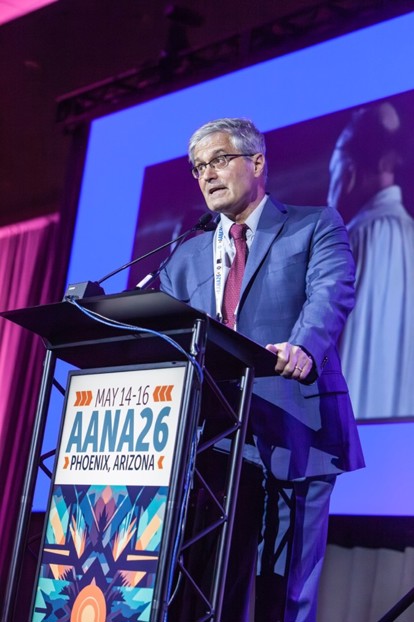
John D. Kelly IV, M.D., FAANA presidential address.
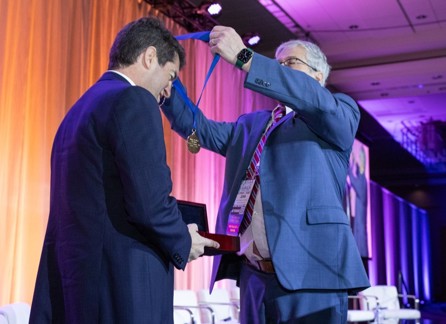
Kevin F. Bonner, M.D., FAANA becomes the 2026-2027 AANA President.
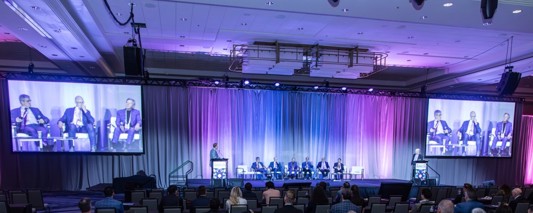
History of Sports Medicine Leadership Panel.
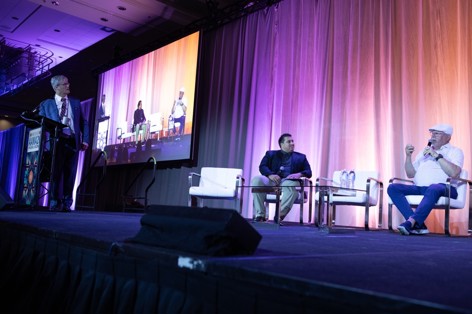
Fireside Chat with Coach Bruce Arians.
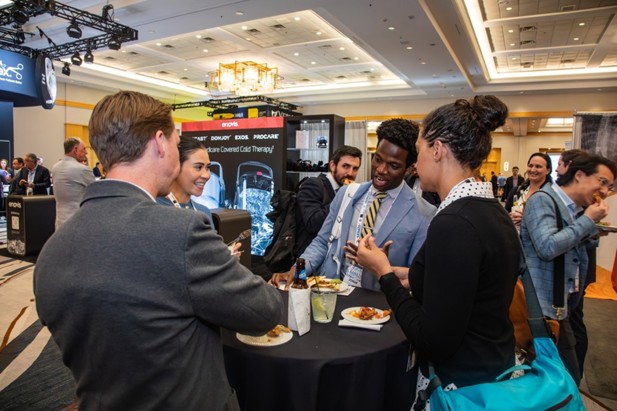
Welcome Reception opening night!
Interested in More Clinical Resources?
Did you attend Dr. Larry Field’s talk on Grafting, SCR, Partial Repair at AANA26?
May we suggest the following reading materials from Arthroscopy, Arthroscopy Techniques and ASMAR:
- Human Dermal Allograft Superior Capsule Reconstruction with Graft Length Determined at Glenohumeral Abduction Angles of 20° and 40° Decreases Joint Translation and Subacromial Pressure Without Compromising Range of Motion: A Cadaveric Biomechanical Study
James E. Tibone, M.D., Colin Mansfield, M.D., Adam Kantor, M.D., Jamies Giordano, M.D., Charles C. Lin, M.D., Yasuo Itami, M.D., Michelle H. McGarry, M.S., Gregory J. Adamson, M.D., Thay Q. Lee, Ph.D. - Fascia Lata Autograft Harvest Technique for Superior Capsule Reconstruction with Fascia Lata Using Mihata Technique
Paul B. Roache, M.D., Arati Mallik Dunbar, M.D. - Partial Rotator Cuff Repair Provides Improved Patient-Reported Outcome Measures Following Superior Capsule Reconstruction (SCR)
Jarret M. Woodmass, M.D., F.R.C.S.C., Eric R. Wagner, M.D., M.S., Kathryn M. Welp, M.S., Michelle J. Chang, B.S., Marc P. Morissette, M.S., Ph.D., C.A.T.(C), Laurence D. Higgins, M.D., M.B.A., Jon J.P. Warner, M.D.
Did you attend Dr. Jeffrey Dugas’ talk on UCL Reconstruction at AANA26?
May we suggest the following reading materials from Arthroscopy, Arthroscopy Techniques and ASMAR:
- Favorable Outcomes Following Elbow Ulnar Collateral Ligament Reconstruction and Repair, Though Repair Associated with Increased Risk of Revision Surgery
Nathan H. Varady, M.D., M.B.A., Suhas Parise, Kyle N. Kunze, M.D., Christopher M. Brusalis, M.D., Riley J. Williams III, M.D., David W. Altchek, M.D., Joshua S. Dines, M.D. - Ulnar Collateral Ligament (UCL) Reconstruction with Proximal Single-Tunnel Suspensory Fixation
Bradley W. Fossum, B.A., Matthew L. Vopat, M.D., Justin R. Brown, M.D., Spencer M. Comfort, B.S., Charles A. Su, M.D., Ph.D., Randall W. Viola, M.D. - Trends of Ulnar Collateral Ligament Reconstruction in the United States from 2003 to 2014: Analysis of 3,133 Patients
Olumuyiwa A. Idowu, M.D., Haroutioun H. Boyajian, M.D., Kevin Lindsay-Rivera, M.D., Cody S. Lee, M.D., Michael J. Lee, M.D., Lewis L. Shi, M.D., Aravind Athiviraham, M.D.
Did you attend Dr. Stephen Aoki’s talk on the Pediatric ACL at AANA26?
May we suggest the following reading materials from Arthroscopy, Arthroscopy Techniques and ASMAR:
- Predicting Pediatric ACL Graft Size
Benjamin J. Sherman, D.O., Kevin Kwan, M.D., John A. Schlechter, D.O. - Combined Anterior Cruciate Ligament and Anterolateral Ligament Reconstruction in Pediatric Patients: Surgical Technique
Vincent Morin, M.D., Laurent Buisson, M.D., Alban Pinaroli, M.D., Gilles Estour, M.D., Maureen Cohen Bacry, M.D., Clement Horteur, M.D. - What Metrics Are Being Used to Evaluate Children and Adolescents After ACL Reconstruction? A Systematic Review
Peter D. Fabricant, M.D., M.P.H., Christopher M. Brusalis, M.D., Jonathan M. Schachne, B.A., Matthew J. Matava, M.D.
Did you attend Dr. Michael Bolognesi’s talk on Primary TKA at AANA26?
May we suggest the following reading materials from Arthroscopy, Arthroscopy Techniques and ASMAR:
- Surgical Reconstruction After Anterior Cruciate Ligament Injury is Associated with Reduced Odds of Future Total Knee Arthroplasty at Mid- to Long-Term Follow-Up
Verdinand C.B. Ruelos, M.D., Sabrina M. Pescatore, Patrick J. Tansey, M.D., Robert W. Lindeman, M.D., William M. Weiss, M.D. - Combined Medial Collateral Ligament Reconstruction and Polyethylene Exchange for Valgus Instability Following Total Knee Arthroplasty
Ajay C. Kanakamedala, M.D., Charles C. Lin, M.D., M.S., Ryan J. Whalen, B.S., Thomas R. Hackett, M.D., CAPT Matthew T. Provencher, M.D., M.B.A., M.C., U.S.N.R., Armando F. Vidal, M.D., Joshua C. Rozell, M.D., Raymond H. Kim, M.D. - Physical Performance and Patient-Reported Outcomes Remain Stable at 5 Years After Total Knee Arthroplasty
Pakpoom Ruangsomboon, M.D., Onlak Ruangsomboon, M.D., Chirathit Anusitviwat, M.D., Bheeshma Ravi, M.D., Ph.D., F.R.C.S.C., Aasis Unnanuntana, M.D.